Street Sweeping Services
in Buckley, WA

Expert Sweeper Truck Services
for Clean & Compliant Spaces

Keeping Parking Lots, Streets & Industrial Areas Debris-Free Across Washington

Sweeping is the cheapest stormwater work you will ever buy. Every pound of grit and leaf litter a sweeper lifts off your pavement is a pound that never reaches a catch basin, never settles in a pipe, and never has to be vacuumed out of a sump at four times the cost.


We run street and parking lot sweeping across Buckley, Pierce County, and the wider Puget Sound region. Family owned, based in Buckley since 2016, with more than 30 years of combined experience across the crew. Every operator is WISHA certified, and we are licensed, bonded, and fully insured.

Get a free sweeping quote for your Buckley, WA property

We Run Regenerative Air Sweepers Only, and That Is a Deliberate Choice

Most sweeping contractors run mechanical broom sweepers because they are cheaper to buy and cheaper to run. A broom sweeper picks up what it can see. Coarse debris, litter, the obvious material.


Regenerative air works differently. It uses a controlled air stream to lift material off the surface and out of pavement cracks, then recirculates that air through a filtration system rather than blowing it back out. The practical difference is the fine particulate, the stuff that actually carries pollutants into your stormwater system and the stuff that a broom leaves behind.


We do not own a broom sweeper. If fine sediment control matters on your site, and under a stormwater permit it does, the equipment choice is the whole conversation.


We also keep current with stormwater filtration systems on the fleet, because the standard for what counts as adequate keeps moving.
Leaf Season Is the One That Catches People Out

Buckley gets heavy leaf fall from September, and this is where sweeping stops being cosmetic.


Wet leaves mat. A layer across a catch basin grate can cut inlet capacity to almost nothing in an afternoon, and it does it silently. The leaves that do get through the grate break down into an organic sludge in the sump that behaves nothing like sediment. It holds water, it smells, and it is the slowest material to vacuum out.


So what does one autumn of skipped sweeping actually cost? Usually a basin cleaning that takes twice as long, plus whatever the flooding did while the grate was covered.


Our recommendation for any site with mature trees: increase frequency through September, October and November, then drop back. Not a flat annual schedule. A schedule that matches when the debris actually falls.


Summer is a different problem. Construction dust and tracked-in material off dry sites, which is a dust control and appearance issue more than a drainage one.

Catch basin and sump cleaning. Vacuum lifts compacted sediment that no scoop will reach.

Storm drain and conveyance lines. Jetting scours the pipe wall, vacuum takes the spoil.

Pond and vault sediment. Removing accumulated material from retention and detention structures.

Oil water separators. Sludge and oil removal with the same equipment, handled under the right disposal rules.

Car wash pits and holding tanks. Confined structures where getting material out cleanly is most of the job.

Emergency blockages. When something has already backed up and it needs clearing today.

Before/after photos of swept lots and streets

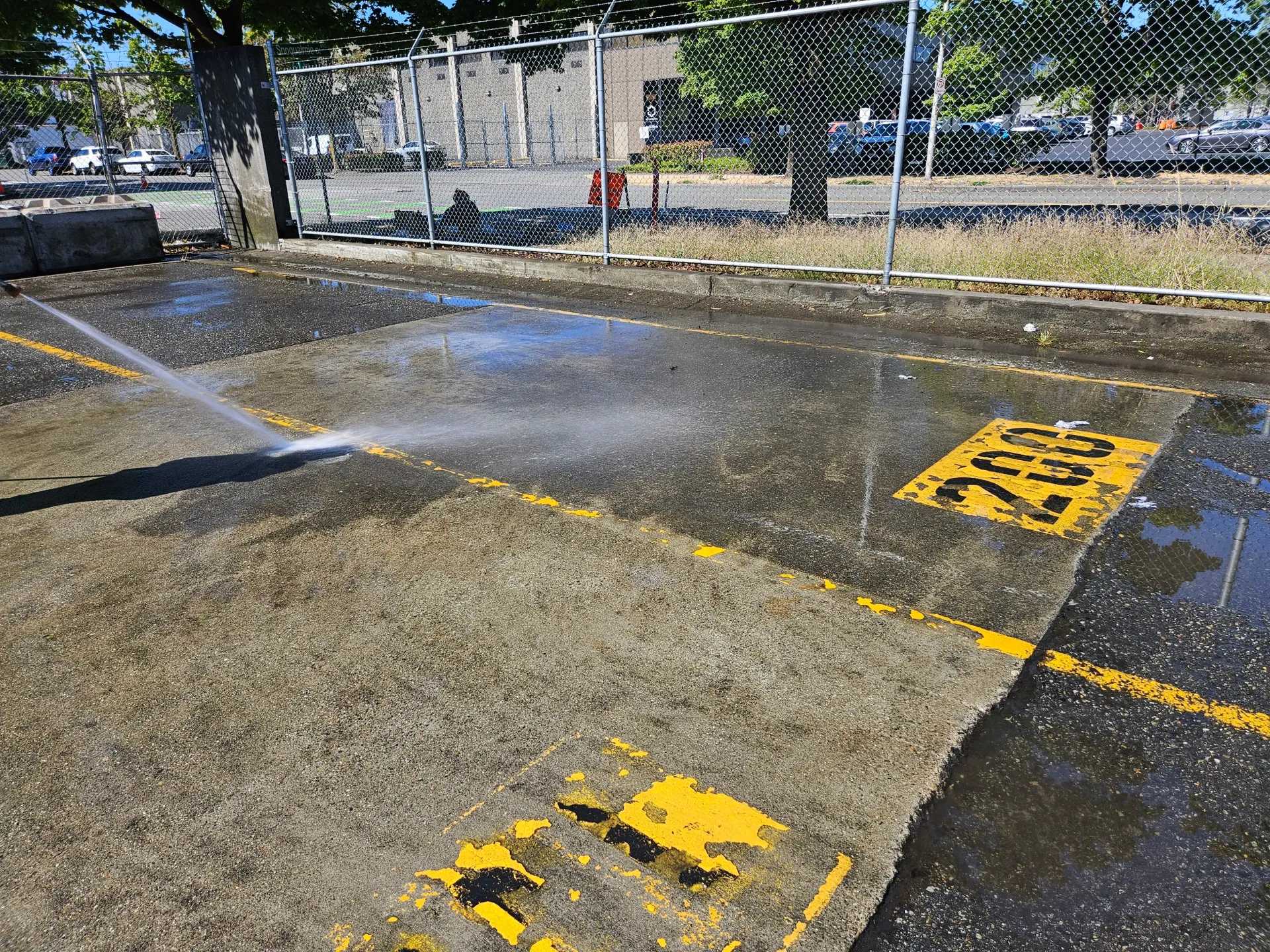
Freshly cleaned commercial parking lot with clear asphalt and painted stall numbers
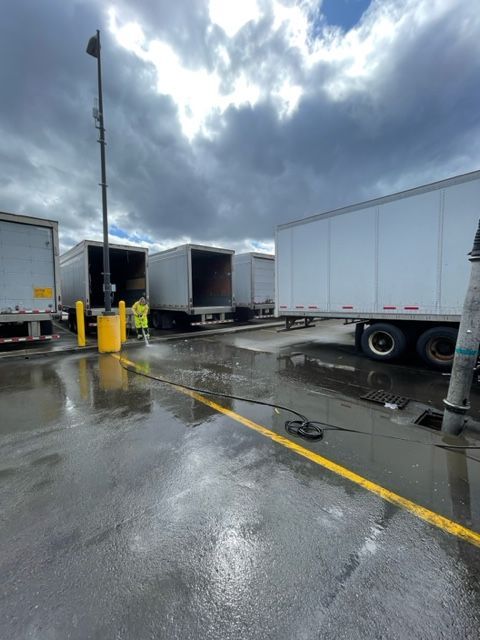
Crew washing down a truck trailer yard, water running toward the storm drain

What We Sweep

  • Municipal streets and public roadways
  • Commercial parking lots, retail centers, office and business parks
  • Industrial yards and heavy traffic sites
  • Warehouse and distribution facilities, where truck traffic tracks material constantly
  • Construction sites, both during work and on completion
  • HOA and residential streets and shared parking

Different surfaces and different debris loads want different frequencies, and we would rather set a schedule that fits your property than sell you a standard package.

How Often Should You Sweep?

There is no single answer, and anyone quoting one over the phone is guessing.


What we generally start from:

High traffic retail and commercial lots. Weekly or fortnightly. Appearance drives it as much as compliance.

Industrial and distribution sites. Weekly during heavy operation. Tracked material accumulates fast.

Sites with mature trees. Baseline schedule, increased through leaf season.

Municipal routes. Set by the jurisdiction, usually on a fixed cycle.

Construction sites. As needed during the work, plus a completion sweep.

We schedule around your operating hours so the sweeper is not working through your busiest period.

Where Sweeping Fits in Your Stormwater Obligations

Sweeping is recognized as a source control measure, which means it addresses the pollutant before it enters the system rather than treating it afterwards. That is the cheaper end of stormwater management by a wide margin.


It also reduces load on everything downstream. Less material reaching your basins means longer intervals between cleanings, less sediment in your conveyance lines, and less dredging in your ponds.


We remove trash, sediment and debris that would otherwise end up in local waterways and streams. Protecting the water here is the reason the business exists, and it is why the equipment choice matters to us more than the margin does.


Where documentation is part of your permit, we can record routes, dates and material removed.
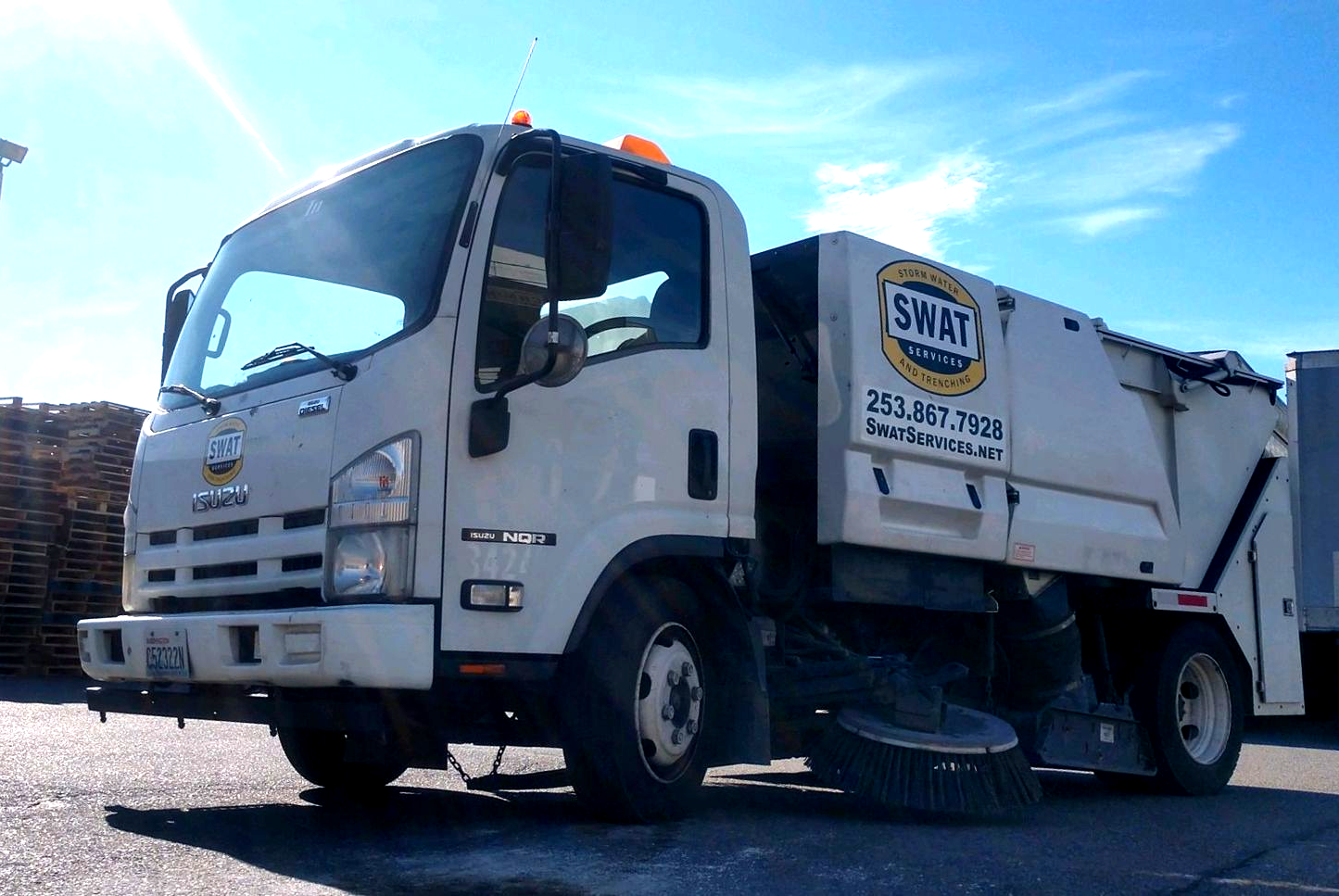
Street sweeper truck with its gutter broom lowered, parked outside the equipment bays

What Street Sweeping Costs

Free estimates and free on site evaluations.


What drives your number:

Area and surface type. Square footage, and whether it is smooth asphalt or broken concrete.

Frequency. Regular routes price better per visit than one-offs.

Debris load. A leaf-heavy site in October is a slower pass than the same site in July.

Access and timing. Overnight or early morning work on an occupied lot costs differently than an empty site.

Disposal volume. Collected material has to go to a permitted facility.


Our honest view on one-off sweeps: they look great for a fortnight and change nothing about your drainage. If the reason you are calling is standing water rather than appearance, a single sweep is not the fix and we will say so.

Related Services

Parking lot sweeping services for commercial lot work specifically

Municipal street sweeping for jurisdiction contracts

Catch basin cleaning, the other half of the same problem

Leaf blowing and debris removal for areas a sweeper cannot reach

Storm drain cleaning and maintenance when material has already reached the lines

Parking lot power washing where sweeping is not enough and the surface needs washing

Frequently Asked Questions

  • What is the difference between regenerative air and a mechanical broom sweeper?

    A broom lifts coarse, visible debris. Regenerative air uses an air stream to pull fine particulate out of the surface and pavement cracks as well, then filters it rather than releasing it. Fine sediment is what carries pollutants into your stormwater system, so for permit purposes the difference is significant. We run regenerative air only.

  • Can you sweep outside business hours?

    Yes. Overnight and early morning work is routine on occupied commercial lots, and we schedule around your operations rather than through them.

  • Do you sweep during the rain?

    Yes, though very heavy rain reduces effectiveness because saturated debris is harder to lift. If the weather is going to waste your money we will tell you and reschedule.

  • How is this different from your parking lot sweeping page?

    Same equipment and crew, different scope. This page covers street and general sweeping including municipal routes and industrial yards. If your job is specifically a commercial lot, parking lot sweeping is the closer fit.

  • Do you provide records for stormwater compliance?

    Yes. We can document routes, dates and material removed, and disposal is handled through permitted facilities.

Set Up a Route Before Leaf Season

Call and you get a technician rather than a call center. We get back to you within a day, the evaluation is free, and same week service is often available around Buckley.


24040 WA-410 Ste J, Buckley, WA 98321 (253) 867-7928
Book street sweeping in Buckley, WA ahead of leaf season

Our Sweeper Truck Services

SWAT Services offers a wide range of Sweeper Truck Services designed to meet the varying needs of municipal clients, local businesses, developers, and property managers throughout Western Washington. We tailor each solution to suit your environment, schedule, and budget:

  • Street Sweeping: We provide routine and one-time sweeping for city roads and residential neighborhoods, removing debris like dirt, leaves, and trash.
  • Parking Lot Sweeping: From shopping centers to office complexes, our professional sweepers help maintain safe and welcoming parking lots for employees and patrons.
  • Construction Site Sweeping:  Construction projects often generate dust, gravel, and other materials that can create hazards and compliance issues. We’ll ensure your site remains clean, organized, and environmentally responsible.
  • Private Community Sweeping: Gated communities, homeowners’ associations, and private developments can rely on us to keep their roads free from dirt and rubbish.
  • Event Cleanup:  Large gatherings often leave behind significant debris. Whether you’re hosting a festival or sporting event, our sweepers quickly restore the location to its former state.

Environmental Protection: By removing sediment and solid wastes,
professional sweeping keeps harmful materials out of waterways, helping
Western Washington meet local and federal standards for storm water
management.

Regulatory Compliance: Compliance with environmental regulations isn’t optional. Our expertise in Best Management Practices (BMPs) ensures you stay ahead of local and EPA guidelines.

Enhanced Property Value: Clean streets and lots contribute to better curb appeal, positively influencing property values and customer perceptions.

Reduced Liability: By eliminating hazards such as gravel, glass, or nails, you minimize the risk of vehicle damage, slips, and falls on your property.

Community Pride: Ongoing sweeping efforts foster a welcoming environment, making local areas more attractive to visitors and potential residents.

GET AN ESTIMATE