Catch Basin Cleaning
in Buckley, WA

Stormwater Compliance

Protect Your Business from Fines & Pollution – Expert Stormwater Management & SWPPP Compliance

There is a right time of year to do this, and it is now.


Our wet season runs October through March. Every catch basin on your property spends those months doing the hardest work it will do all year, and it does that work with whatever is already sitting in the sump when the first storm arrives. Clean it in September and it has full capacity for six months. Clean it in November and you have already had the flood.


We clean catch basins across Buckley, Pierce County, and the wider Western Washington area. Family owned, based in Buckley since 2016, and our crew carries more than 30 years of combined stormwater experience. Call and a technician answers.

Book pre-season catch basin cleaning in Buckley, WA

Why We Say Every Six Months

That is our standard recommendation, and it is not arbitrary. A catch basin sump is designed to hold a set volume of sediment before it stops functioning as a sump and starts functioning as a partial blockage. Two cleanings a year keeps you comfortably inside that volume on most commercial sites.


The timing matters more than the count. One visit ahead of the wet season, one after it. That way the basin goes into winter empty and comes out of winter cleared of everything the winter put in it.


Sites that generate more debris need more. A loading dock, a site with heavy truck traffic, a lot ringed by mature trees, or anywhere construction is happening nearby will fill faster than the calendar suggests.


Ever looked into a catch basin in late September and seen water standing above the outlet pipe?

That basin is already full. It is not going to cope with October.
What Buckley Does to Catch Basins

Two local factors drive almost everything we pull out of a sump here.

Fine sediment, constantly. Our rain is not dramatic, it is relentless. Months of steady runoff carries grit off asphalt and roofs in small amounts every single day, and that fine material compacts in the bottom of a sump into something closer to packed sand than loose silt. It does not rinse out. It has to be vacuumed.

Leaf load, seasonally. Buckley gets heavy leaf fall from September. Leaves do two things: they mat across the grate and cut your inlet capacity immediately, and the ones that get through break down into an organic sludge that holds water and smells. A basin that was fine in August can be effectively blocked by mid October without anyone touching it.

If your property has mature trees anywhere upslope of a basin, the autumn visit is the one that matters.

Our Six Step Catch Basin Cleaning Process

1. Assessment. We open the structure, measure sediment depth against the sump design, and check the condition of the walls, frame, and grate before any equipment runs. You find out what you actually have.

2. Debris and sediment removal. Specialized vacuum and suction tools pull the material out. Vacuum recovery, not scooping, because the fine compacted layer at the bottom is the part that matters and a scoop will not lift it.

3. Wall and pipe flushing. High pressure hoses scour the basin walls and flush the inlet and outlet pipes. Sediment clings to walls and to the first few feet of pipe, and skipping this step means the basin refills faster than it should.

4. Inspection. With the structure clean we can actually see it. Cracks, failed joints, corroded frames, root intrusion at the pipe penetrations. We document what we find with measurements rather than adjectives.

5. Disposal. Recovered material goes to a permitted facility, handled per local regulations. Nothing gets dewatered on your site and nothing gets flushed downstream.

6. Final report. You get written documentation with findings, photos, sediment volumes, and disposal records. That is the paperwork you hand an inspector.

Before/after photos of catch basin cleaning projects

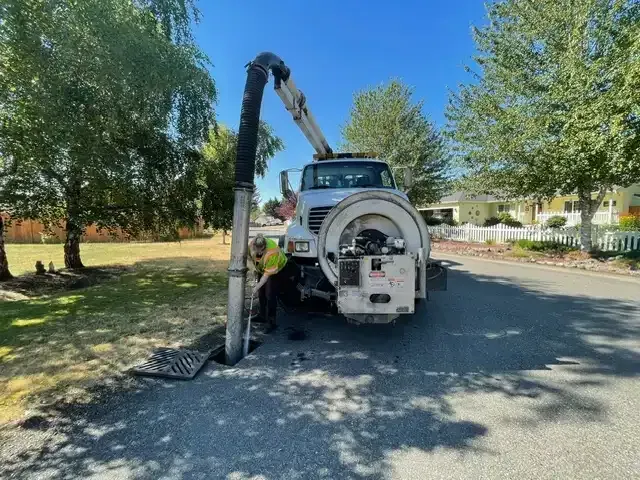
Vactor truck boom lowered into a curbside catch basin on a residential street
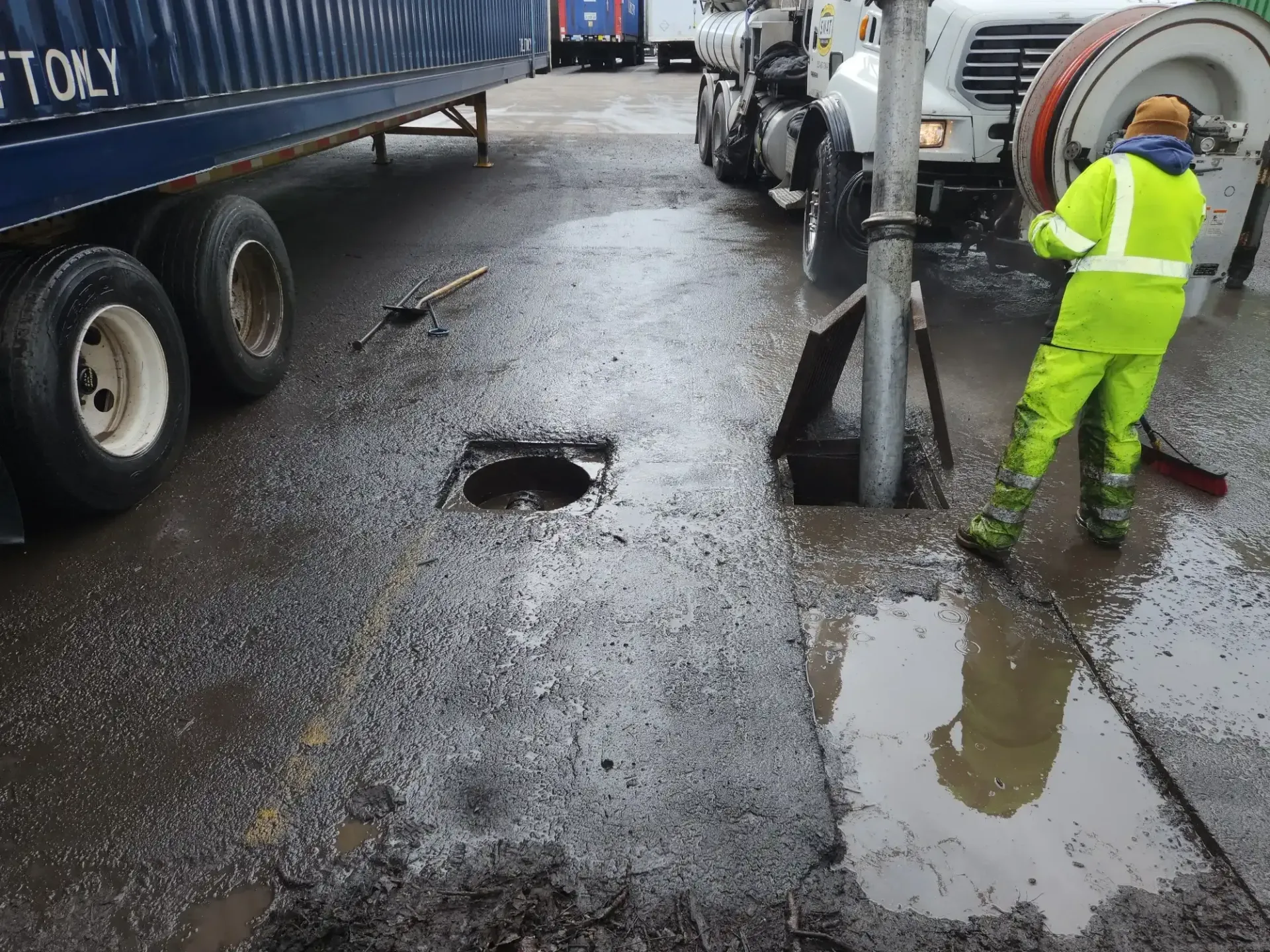
Technician guides the vacuum tube into a catch basin on a wet commercial lot
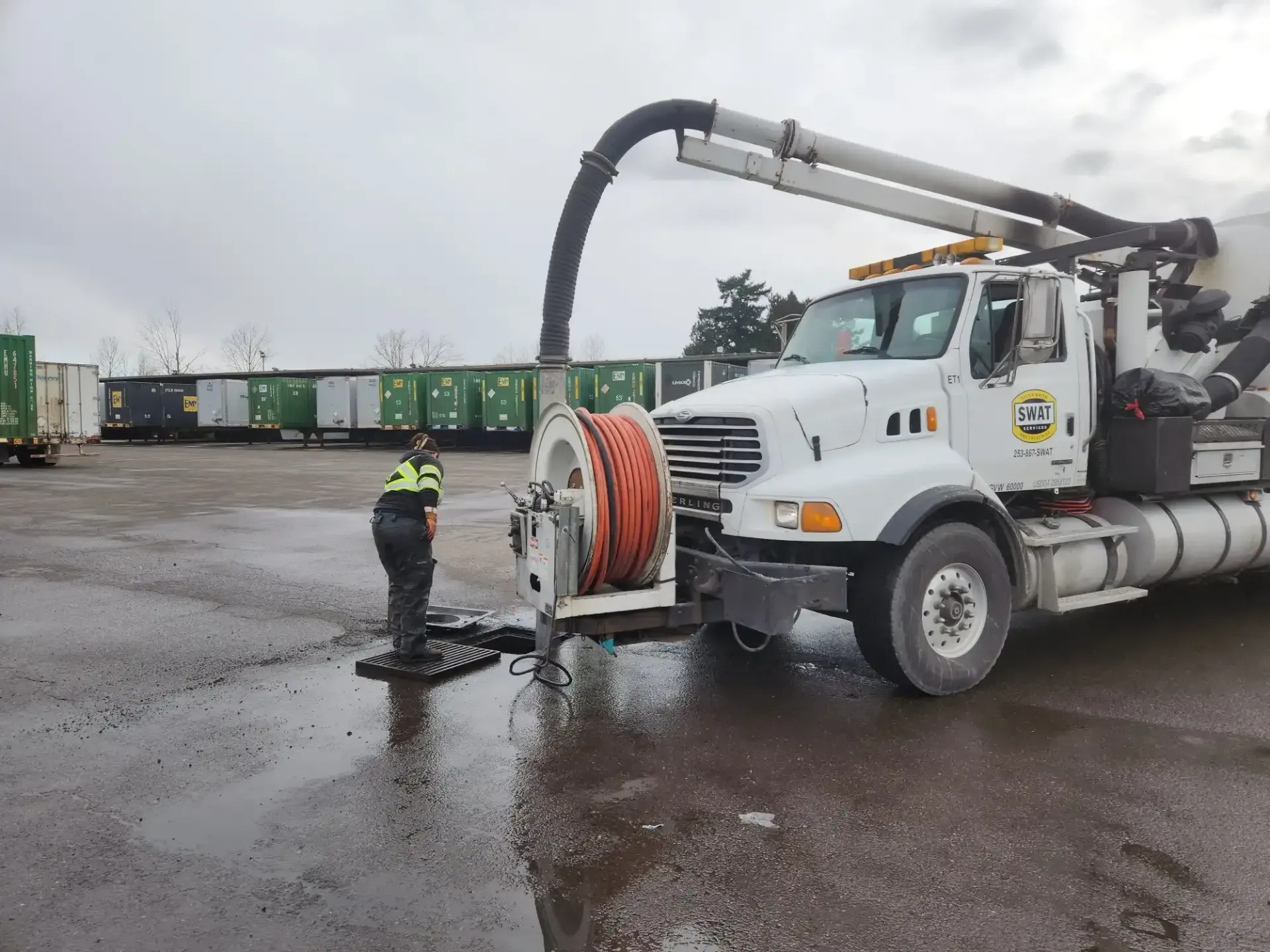
Crew member at an open catch basin with the jetter hose reel on the vactor truck behind
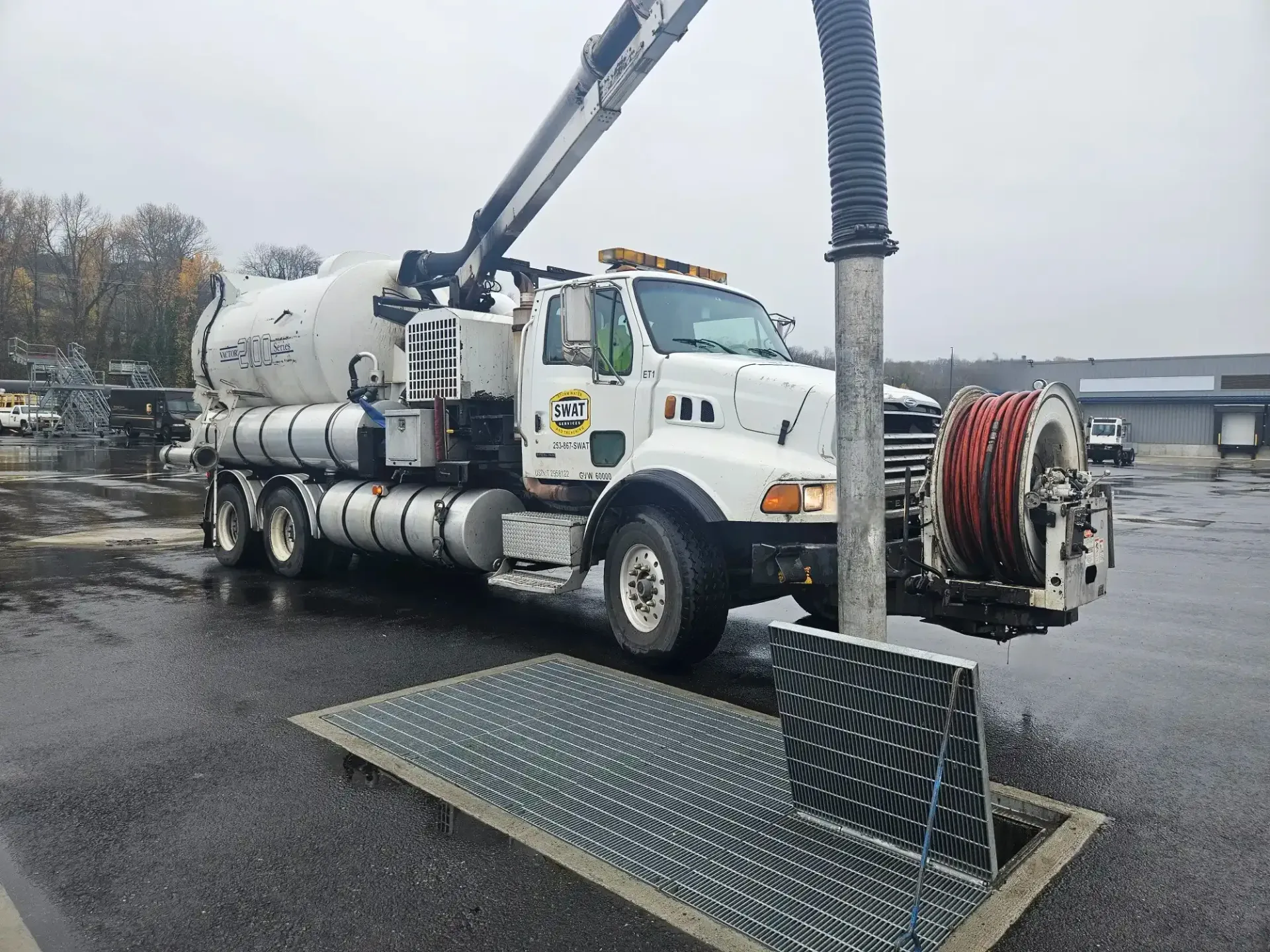
Vactor truck beside a lifted storm grate, ready to clean the structure below

The Compliance Side

Catch basins sit squarely inside stormwater permit obligations, and "we cleaned it" is not a record. Dates, volumes, disposal documentation, and condition notes are what count when someone asks.


We keep records built for that purpose on every visit, which means when an inspection lands you are pulling a file rather than reconstructing a year from memory. If you have received a notice of violation, say so when you call, because it changes the order we work in.


Where a site needs a plan rather than a service visit, that sits under SWPPP development and stormwater compliance assistance.

What Catch Basin Cleaning Costs

Estimates and on site evaluations are free, and we do that because a real number needs eyes on the property.


What moves the price:

  • Number of structures. Most sites have more than the owner thinks. We count them during the evaluation.
  • Sediment depth and type. Compacted grit takes longer than loose debris. Organic sludge is the slowest of all.
  • Access. The truck needs to get within hose reach of each basin.
  • Disposal volume. It is billed by what comes out, and it has to go somewhere permitted.
  • Condition findings. A cracked structure becomes a repair conversation, not a cleaning line item.

Honest opinion, and it costs us work to say it: if your basins were cleaned in spring and your site has no trees and low traffic, you may not need us until next year. We would rather tell you that and keep you as a customer than sell you a visit you do not need.
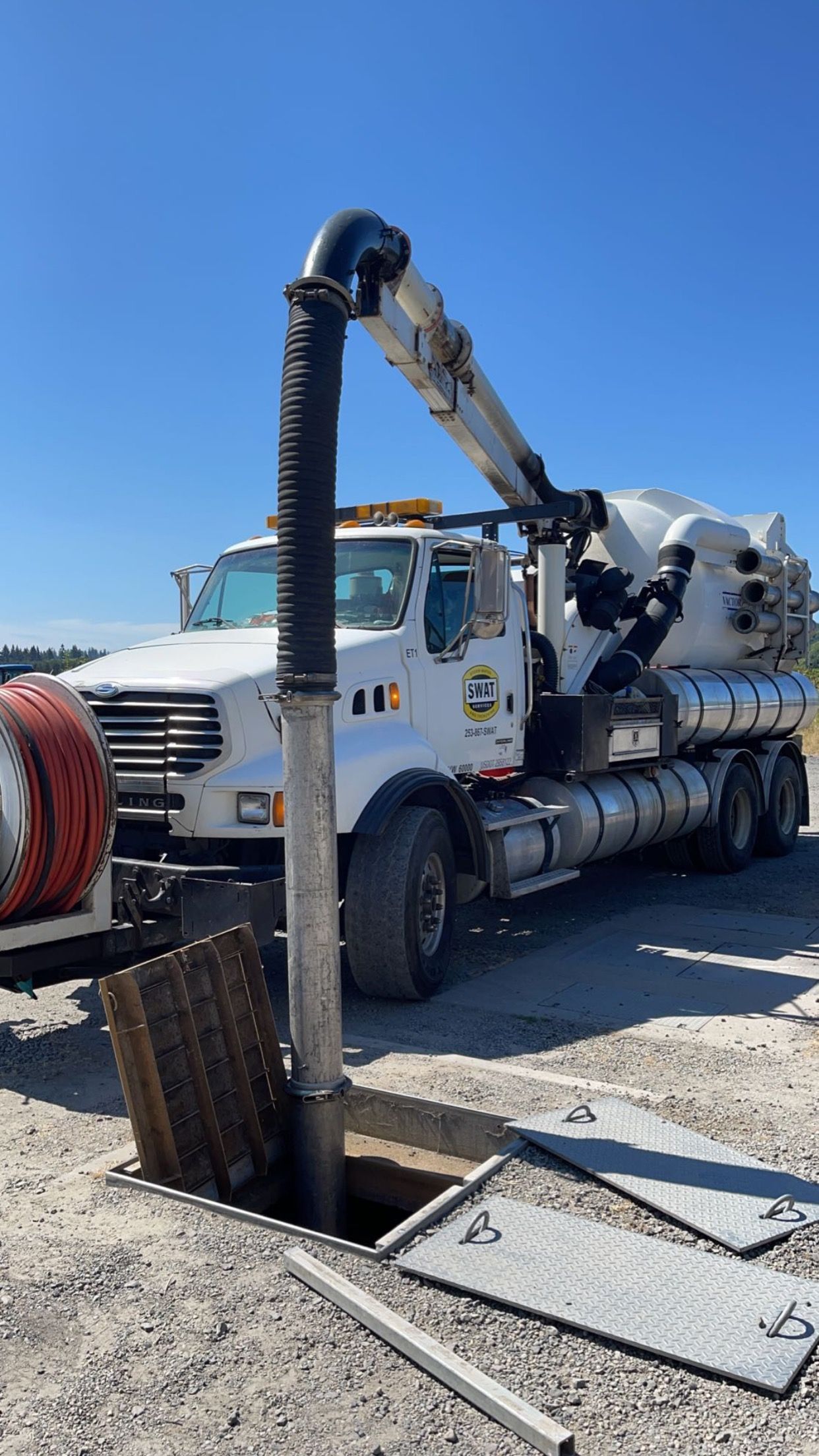
SWAT Services vactor truck with its vacuum boom lowered into an open catch basin

Related Stormwater Services

Catch basins are one part of a system, and problems rarely sit in only one place:


Storm drain cleaning and maintenance for the lines running out of your basins

Vactor truck services for combined vacuum and high pressure jetting

Stormwater system maintenance covering conveyance and inlet repair

Retention pond cleaning and maintenance where the system discharges to a pond

Street sweeping services, which cuts how much sediment reaches your basins in the first place

Stormwater system repair when a structure has failed rather than filled


That fifth one is worth a thought. Sweeping and basin cleaning work against the same problem from opposite ends,

and sites that sweep regularly need basin cleaning less often.

Frequently Asked Questions

  • How do I know if my catch basin needs cleaning?

    Standing water above the outlet, water backing up onto the surface during rain, odor, or visible debris at the grate. If you can see sediment when you look in, it is past due. We check depth against the sump design during a free evaluation rather than guessing.

  • Do you clean sanitary sewer or septic systems?

    No. We work on stormwater and drainage only. Septic and sanitary sewer fall outside what we do, and we will tell you that up front instead of taking the job.

  • How long does catch basin cleaning take?

    A single structure is usually well under an hour. Most commercial sites with a handful of basins are a same day job. Access and sediment condition drive it more than count does.

  • Can you clean catch basins in winter?

    Yes, and emergency response is available. We would still rather see you before October, because a basin cleaned before the season performs for the whole season.

  • Do I get documentation for my stormwater permit?

    Yes. Every job produces a written report with findings, photos, volumes, and disposal records.

Get Ahead of October

The evaluation is free, we get back to you within a day, and same week service is often available for Buckley and the immediate area.


24040 WA-410 Ste J, Buckley, WA 98321 (253) 867-7928
Schedule catch basin cleaning in Buckley, WA before the wet season

Understanding Stormwater Regulations
in Western Washington

Western Washington and its neighboring communities are subject to various stormwater regulations aimed at preserving water quality and preventing flooding. Here in Washington State, strict rules govern how stormwater is managed, stored, and discharged. Failing to follow these regulations can lead to costly fines, environmental damage, and potential legal action.


Local businesses and property owners may face:


Complex permitting processes


  • Frequent changes to municipal stormwater requirements
  • The need to implement and maintain proper drainage systems
  • Potential liabilities if contaminants enter local water sources


Staying on top of these regulations is vital. Non-compliance can result in hefty penalties and disrupt your daily operations. By working with professional Stormwater Compliance Assistance providers like SWAT Services, you can ensure your facility adheres to all relevant guidelines.

Comprehensive Stormwater Compliance Support Services

At SWAT Services, our stormwater compliance offerings go beyond basic consulting. We deliver a holistic approach designed to meet your specific needs in Western Washington. Our main services include:

  • Site Assessment and Evaluation: Our team of highly trained technicians begins every project with a thorough site assessment. We identify areas of concern, evaluate your existing infrastructure, and determine the best path forward. By understanding the unique characteristics of your property, we create a strong foundation for long-term compliance.
  • Stormwater Pollution Prevention Plan (SWPPP) Development: A properly designed SWPPP is essential for any facility subject to stormwater regulations. We’ll help you create or refine your Stormwater Pollution Prevention Plan, ensuring it meets both local and federal standards. Our experts will outline best practices for preventing pollutants from entering your drainage system, minimizing your environmental impact, and keeping you aligned with all regulatory requirements.
  • Best Management Practices (BMPs) Implementation: BMPs are your frontline defense in preventing pollutants from being washed into local water systems. From installing silt fences to optimizing storm drains and oil-water separators, our team ensures each BMP is chosen and installed with maximum efficiency in mind. We continuously evaluate and update these measures to ensure lasting protection.
  • Monitoring and Reporting Assistance: Compliance doesn’t end once your systems are in place. Ongoing monitoring and accurate reporting are critical to maintaining stormwater compliance over time. SWAT Services offers regular site inspections, sampling, and thorough documentation to keep your property ahead of the curve. Our proactive approach helps you address minor issues before they become major complications.

Frequently Asked Questions About Stormwater Compliance in Western Washington

  • What is Stormwater Compliance Assistance?

    It involves ensuring your property meets local, state, and federal guidelines on managing stormwater runoff, preventing pollution, and protecting community resources.

  • Do I need a permit for stormwater management?

    Many projects in Western Washington do require permits. This often depends on property size, location, and the potential for pollution. Our team can help you determine permit requirements and guide you through the process.

  • How often should I inspect my stormwater systems?

    Regular inspections are crucial—typically at least quarterly or following heavy rain. We can create a schedule that meets both regulatory standards and your property’s needs.

  • Can you help if I already have a SWPPP?

    Absolutely. We can review and update any existing SWPPP to ensure it meets the latest regulations and reflects any changes in your operations.

  • How quickly can I get service if there’s an emergency?

    We offer prompt response times. Emergency service is always available, and our technicians are just a phone call away.

GET AN ESTIMATE